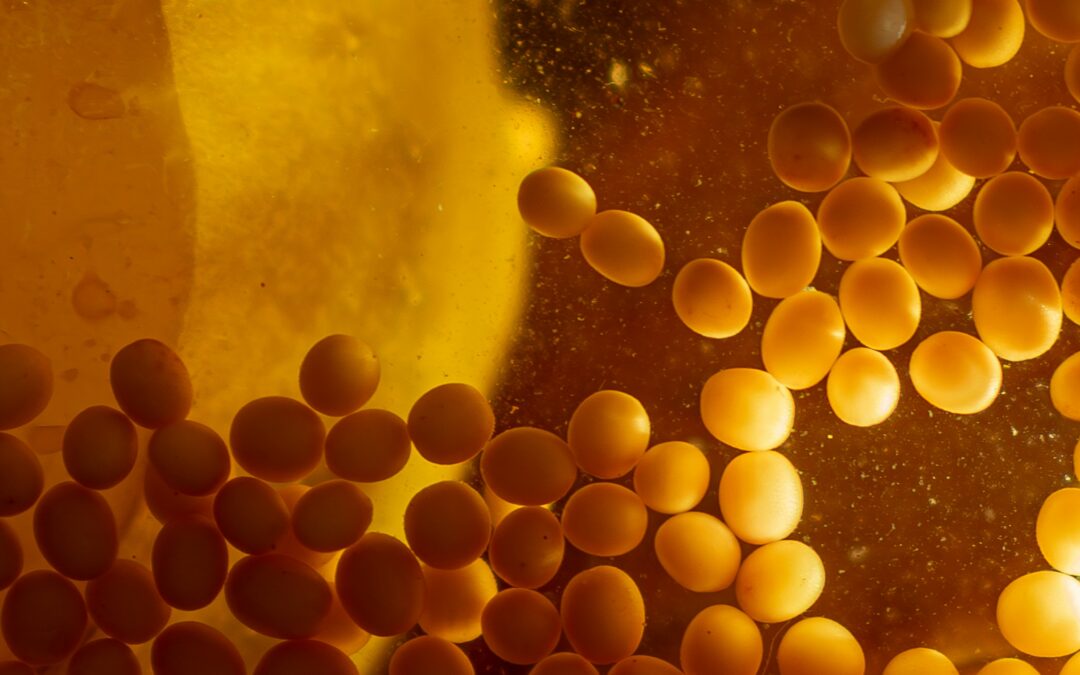
Have you ever flipped over a snack bar, a bag of chips, or a carton of dairy-free milk and spotted the words soy lecithin tucked into the ingredient list? You are not alone — and you are not wrong for wondering what it actually is. Soy lecithin is one of the most widely used food additives on the market, yet most people have no idea what it does, where it comes from, or whether it belongs in their body.
The good news? Once you understand it, you will feel empowered to make the best choice for yourself every time you reach for a product at the grocery store. Let’s dig in.
What Is Lecithin?
Before we can talk about soy lecithin specifically, it helps to understand what lecithin is at its core. Lecithin is a group of naturally occurring compounds called phospholipids — waxy, moisture-retaining substances found widely in both plants and animals. These compounds form colloidal solutions in water and have emulsifying, wetting, and antioxidant properties.
In practical terms: lecithin is a substance that can hold onto moisture and allow oil and water to mix — two things that do not naturally want to coexist. Lecithins can be derived from soy, corn, eggs, and sunflower, among other sources. Soy lecithin is by far the most common form you will encounter in packaged foods.
What Does Soy Lecithin Do in Food?
Soy lecithin serves several functional roles in food products. Its primary purpose is as an emulsifier — it allows oil and water-based ingredients to blend smoothly and stay blended. Think of the silky texture of chocolate or the creamy consistency of a salad dressing. Without an emulsifier, those products would separate.
Beyond emulsification, soy lecithin is also used as an anti-caking agent, keeping powdered or granulated products from clumping, and sometimes as an antioxidant, helping to extend shelf life by slowing oxidation.
You will commonly find it listed as an ingredient in: chocolate, chips, cereals, milk alternatives, snack bars, baked goods, and margarine.
Is Soy Lecithin Safe?
Here is where it gets nuanced — and where being an informed label reader really pays off.
Soy lecithin is generally recognized as safe for consumption by regulatory agencies, and nutrition researchers such as Mira Dessy, author of The Pantry Principle, concur. For most people, consuming small amounts of soy lecithin in food products is not a cause for alarm.
However, “generally safe” is not the complete picture. The safety of any lecithin depends significantly on how it was processed — and not all soy lecithin is made the same way.
How Soy Lecithin Is Made: Two Very Different Processes
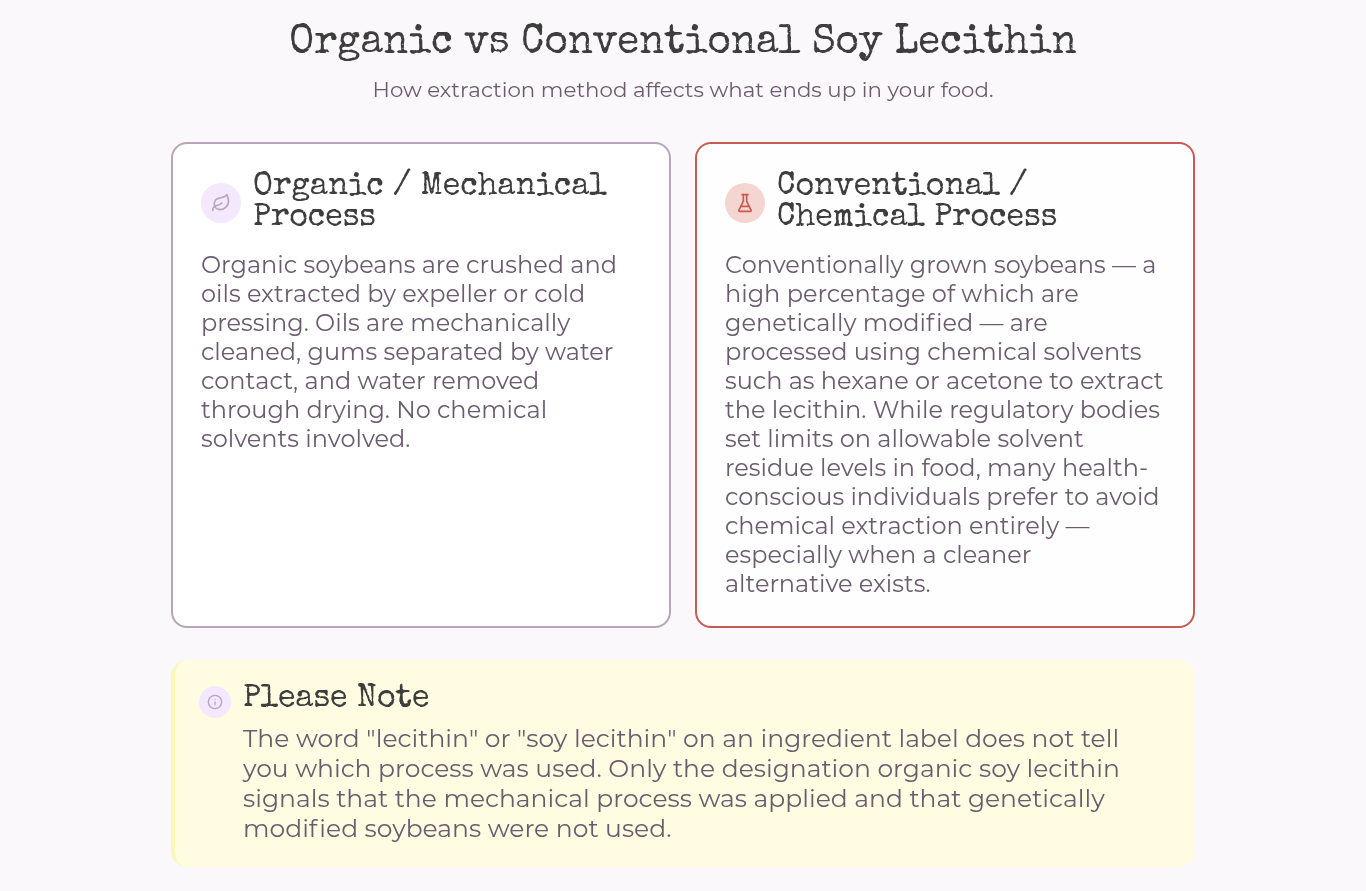
According to the USDA, lecithin processing can occur either through natural, mechanical methods or through chemical extraction. The distinction is important.
A Word on GMOs and Soy
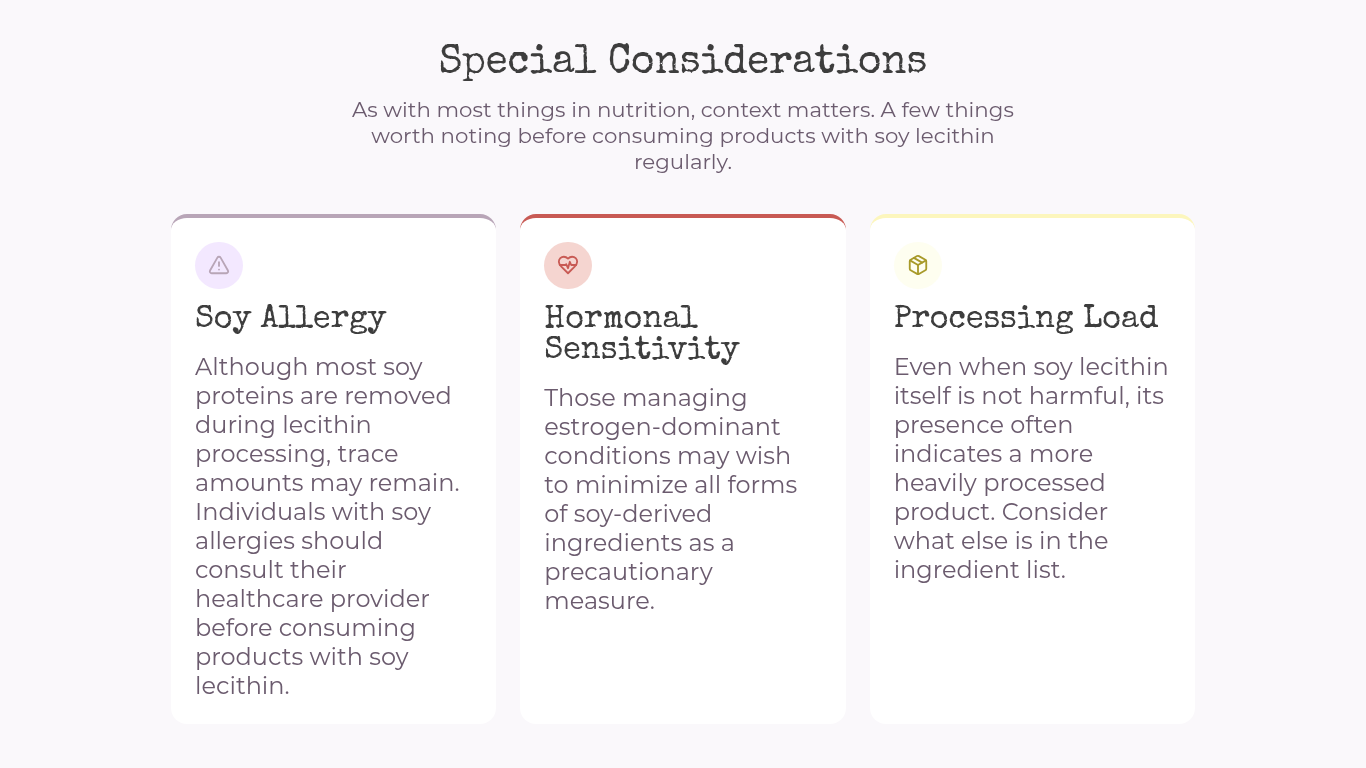
Conventional soybeans are among the most genetically modified crops in the United States. While the science on GMO safety is still evolving and debated, many health practitioners recommend minimizing exposure when possible, particularly for those with hormonal imbalances or sensitivities, since soy contains phytoestrogens — plant compounds that can mimic estrogen in the body. For those choosing to reduce their GMO intake, seeking out the organic designation on any soy-containing product is an important step.
More Food for Thought
1. The label is your most powerful tool.
Seek out “organic soy lecithin” in the ingredient list. If the label simply reads “soy lecithin” with no organic qualifier, you can reasonably assume conventional, chemically processed soybeans were used.
2. Not all processed food is equal.
Minimally processed foods that happen to contain organic soy lecithin are quite different from ultra-processed products that use conventionally derived lecithin alongside a long list of other additives. The difference matters.
3. Sunflower lecithin is a solid alternative.
If you prefer to avoid soy entirely, sunflower lecithin is a non-GMO option increasingly found in cleaner food products. It’s extracted without chemical solvents and is free of common allergens. Some practitioners also use sunflower lecithin as a supplement, particularly for its high choline content—though it can serve practical culinary purposes too. (Interestingly, some even use it as a supplement to prevent clogged milk ducts in breastfeeding.)
4. Quality of all ingredients matters.
As with any ingredient, the source and production method influence the nutritional profile and safety of the final product. When in doubt, choose products with fewer, more recognizable ingredients.
5. Consistency in label reading pays off.
The more familiar you become with common food additives like soy lecithin, the faster and more confident your grocery shopping becomes. This kind of nutritional literacy is one of the most empowering health habits you can build.
Now that you know what soy lecithin is, where it comes from, and what to look for on a label, you’re better equipped to advocate for yourself in the grocery aisle. You don’t have to avoid every packaged food or become an ingredient expert overnight—but knowing the difference between organic soy lecithin and its conventional counterpart is a meaningful step toward eating with intention.
Reviewed by Leandra Davis, NTP, RHP, BCHN®

References
Dessy, M. (2013). The Pantry Principle: How to read the label and understand what’s really in your food.Versadia Press.
United States Department of Agriculture (USDA). National Organic Program: Handling/Processing. Organic Regulations.
Murray, M. T., & Pizzorno, J. The Encyclopedia of Healing Foods. Simon and Schuster, 2010.
Sacks, F. M., et al. “Soy Protein, Isoflavones, and Cardiovascular Health.” Circulation, vol. 113, no. 7, 2006.
National Institute of Environmental Health Sciences (NIEHS). Hexane: Chemical Information Summary.
I am a Certified Nutrition Consultant and Board Certified in Holistic Nutrition®. I am not a registered dietitian nor a physician. The content on this website is for informational and educational purposes only. Please consult with your healthcare provider on any medical conditions you may experience